
Initial questions
To consider when choosing activities and creating the workshop using the links below:
- Who is the audience?
- How much time?
- What are the goals? eg:
- General understanding of what permaculture is.
- General understanding of permaculture ethics / principles.
- Understanding of how permaculture can apply to their own life / garden / container garden.
- Have tried out design (in garden or in pots).
- Have clear idea of next steps they can take.
Introduction to Permaculture links and activities
Labels:
- all = all levels; basic = basic level; med = medium level; higher = most experienced participants.
- Initial/ice-breaker activities. all
- Defining permaculture. basic
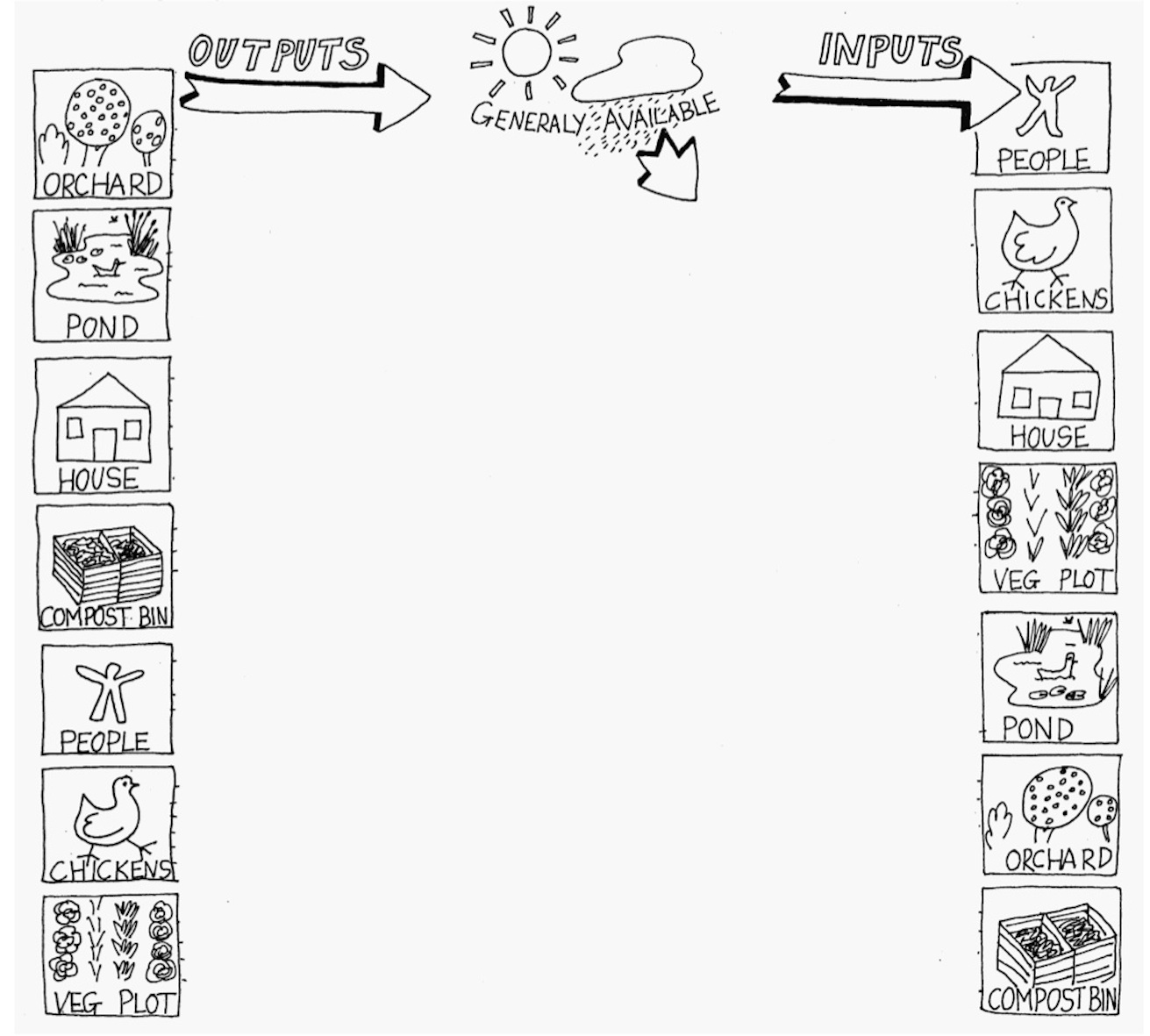
- Input/output thinking; handout (JPG, from Permaculture Association)basic
- Permaculture ethics. basic
- Permaculture principles. med
- Design process:
- General introduction. med
- Surveying. med
- Forms of analysis:
- Input/output. basic
- Zones. med
- Flows. higher
- Other. higher
- Design activity ideas and setup. med
- Wind-up ideas and feedback (Feedback form (PDF, from Permaculture Association)). all
Poster version of Introduction to Permaculture.
Permaculture in Pots links and activities
1 hr or 2 hr
- Initial/ice-breaker activities. all
- Defining permaculture. all
- Permaculture ethics. all
- Permaculture principles useful for container design. 2 hr
- Input/output for containers. 2 hr
- Resources and limitations for containers 3 hr.
- Container specifics:
- Getting containers. 1 hr
- Useful plants; handout (.doc). 2 hr
- Perennials.
- Self-seeders.
- Herbs.
- Plants that like containers.
- Plants that don’t like containers.
- Making and getting soil. 1 hr
- Design activity. 2 hrs; handout (.doc)
- Wind-up ideas and feedback. all
- Resources/next steps page (PDF; original .tex is on laptop).
General permaculture links and activities
- Print out of useful links (PDF here, .tex on laptop).
- Feedback form (PDF, from Permaculture Association).
- Ethics and Principles handout (.doc).